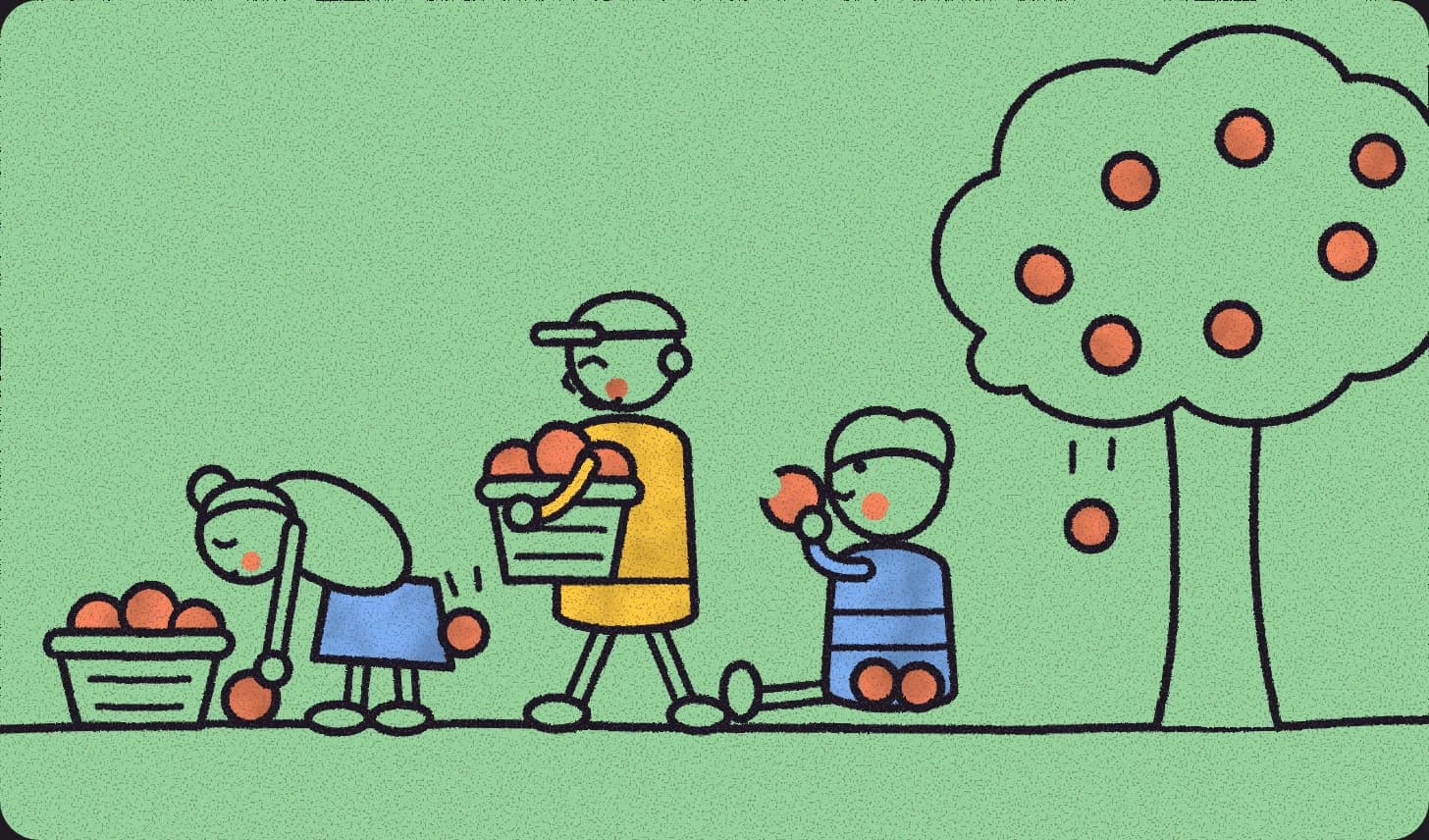
01Apples fall every autumn. Everyone picks them up.
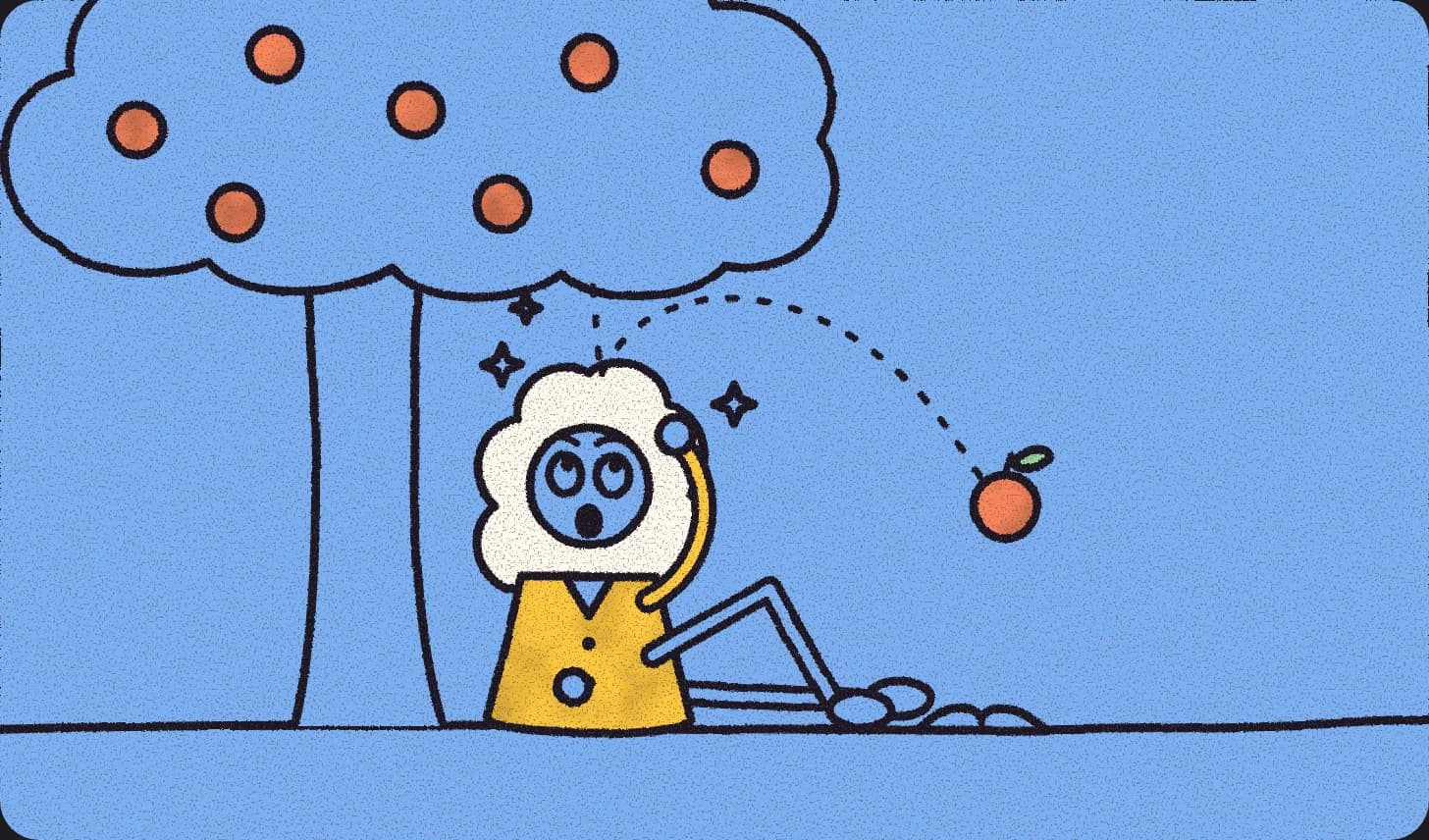
02One bounces off Isaac Newton.
03He asks: why does it always fall straight down?
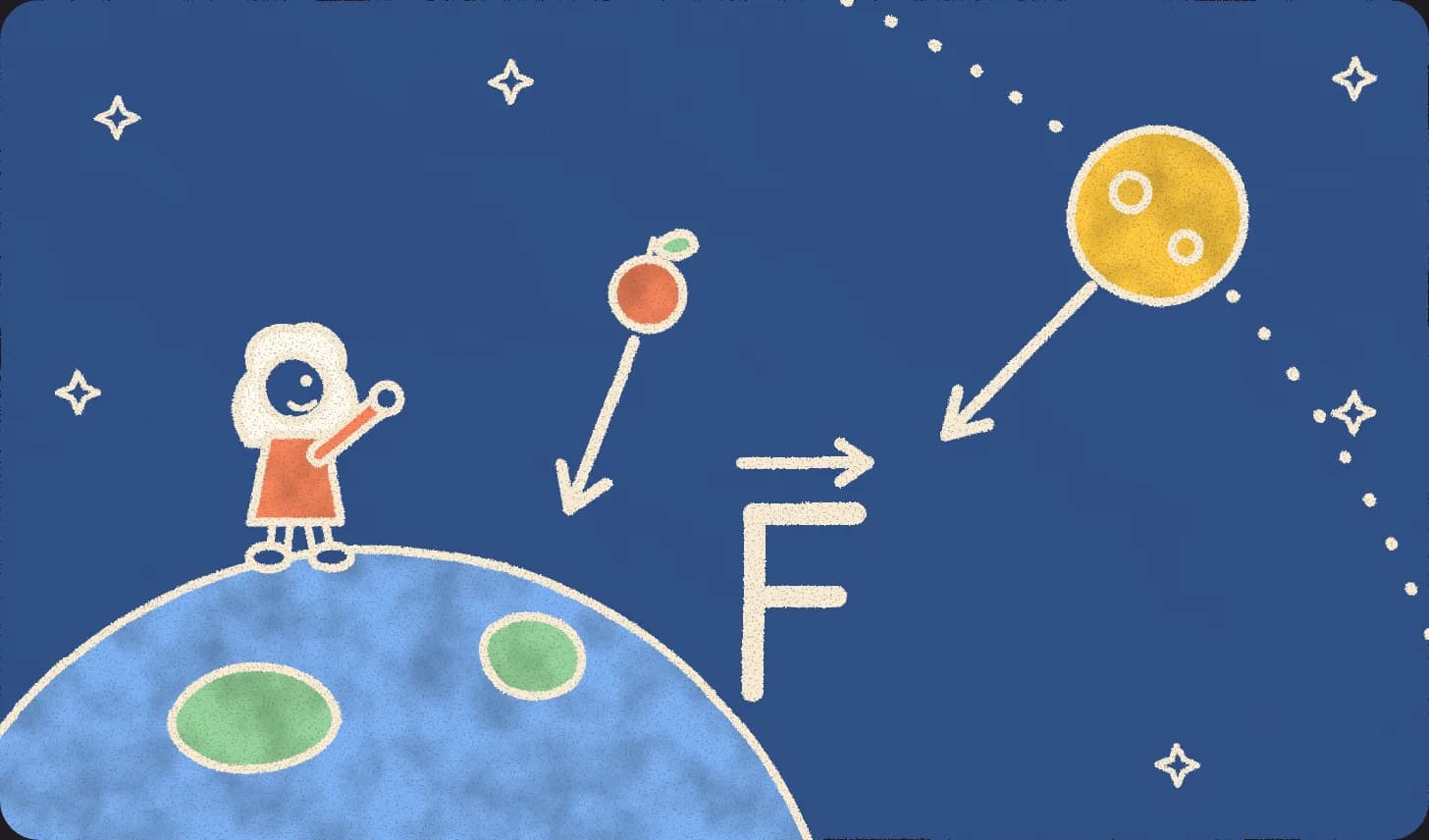
04The pull that brings the apple down also keeps the Moon going round the Earth.
Everyone saw the apples
In 1666 the plague closed the University of Cambridge, and Isaac Newton, then 23, went home to his family’s farm at Woolsthorpe in Lincolnshire. There were apple trees in the garden. Apples had been falling from trees for as long as there had been trees, and people had always done the sensible thing: picked them up.
One question
Sixty years later, Newton told his friend William Stukeley what happened under one of those trees. Stukeley wrote it down:
Why should that apple always descend perpendicularly to the ground, thought he to himself.
Not where it fell, or whether it was ripe: why it always falls down, never sideways or up. It is the kind of question a five-year-old asks, and most grown-ups have stopped asking.
From the apple to the Moon
Newton followed the question further than anyone had. If the Earth pulls the apple, how far up does the pull reach? Perhaps as far as the Moon, growing weaker with distance. Then the Moon is falling too, all the time, and only its speed keeps it going round us instead of landing. One pull for the apple and the Moon. About twenty years later he set it out in full in the Principia (1687), as the law of universal gravitation.
Millions saw the apple fall, but Newton was the one who asked why.
Why we tell it to little people
The answers are easy to find now; a machine will give them in a second. What still has to be learned is the habit Newton had: noticing something everyone else walks past, and asking why. That habit grows with practice, the way a muscle does. Every COIPE game is built to give it some.
A note on the comic. In our second panel the apple bounces off Newton’s head. In Stukeley’s account he only watched it fall. The bump is ours.
Sources
- William Stukeley, Memoirs of Sir Isaac Newton’s Life (1752), held by the Royal Society.
- Isaac Newton, Philosophiæ Naturalis Principia Mathematica (1687).